


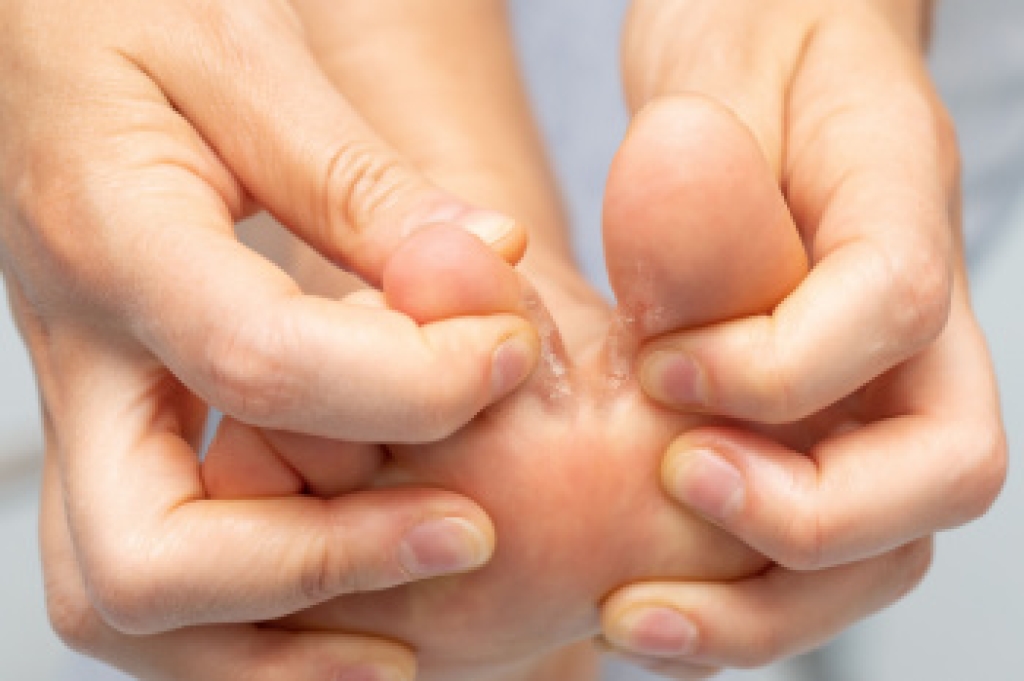
Athlete's foot is a fungal infection that affects the skin of the feet, usually between the toes. It commonly develops on the skin between the toes, on the bottoms of the feet, and around the toe pads. Athlete's foot is highly contagious. It can spread through contact with contaminated surfaces, footwear, or shared facilities, like pools, shower areas, and gym locker rooms. Early signs include itching, redness, and burning sensations. Some people notice dry skin or mild discomfort when walking. Others develop skin irritation that becomes more noticeable as the infection progresses. In some cases, the infection affects one foot. It can also spread to both feet and become more difficult to manage.
Athlete's foot can appear in several forms. One common type causes cracked skin, peeling, and soreness between the toes. Another form creates a dry, scaly rash along the bottom and sides of the foot. This pattern is sometimes called moccasin-type athlete's foot because it follows the shape of a moccasin shoe. More severe infections include blisters, painful sores, and areas of inflamed skin. Some people experience persistent itching without obvious skin changes. Others develop thickened, flaky skin that resembles severe dryness. When bacteria enter damaged skin, additional symptoms include swelling, drainage, and increased pain. These signs require prompt medical attention from a podiatrist.
A podiatrist can diagnose athlete's foot by examining the affected skin and evaluating symptoms. In some cases, a small skin sample is collected and examined to confirm the presence of fungus. Professional treatment focuses on eliminating the infection and preventing complications. Untreated athlete's foot can continue to spread and lead to ongoing skin damage. It can also affect the toenails, causing discoloration and thickening. If you have symptoms of an athlete's foot infection, it is suggested that you schedule an appointment with a podiatrist for a diagnosis and effective relief and treatment plan.
Athlete’s foot is an inconvenient condition that can be easily reduced with the proper treatment. If you have any concerns about your feet and ankles, contact Kellvan Cheng, DPM from Elite Foot & Ankle. Our doctor will treat your foot and ankle needs.
Athlete’s Foot: The Sole Story
Athlete's foot, also known as tinea pedis, can be an extremely contagious foot infection. It is commonly contracted in public changing areas and bathrooms, dormitory style living quarters, around locker rooms and public swimming pools, or anywhere your feet often come into contact with other people.
Solutions to Combat Athlete’s Foot
- Hydrate your feet by using lotion
- Exfoliate
- Buff off nails
- Use of anti-fungal products
- Examine your feet and visit your doctor if any suspicious blisters or cuts develop
Athlete’s foot can cause many irritating symptoms such as dry and flaking skin, itching, and redness. Some more severe symptoms can include bleeding and cracked skin, intense itching and burning, and even pain when walking. In the worst cases, Athlete’s foot can cause blistering as well. Speak to your podiatrist for a better understanding of the different causes of Athlete’s foot, as well as help in determining which treatment options are best for you.
If you have any questions please feel free to contact our office located in Carrollton, TX . We offer the newest diagnostic and treatment technologies for all your foot and ankle needs.